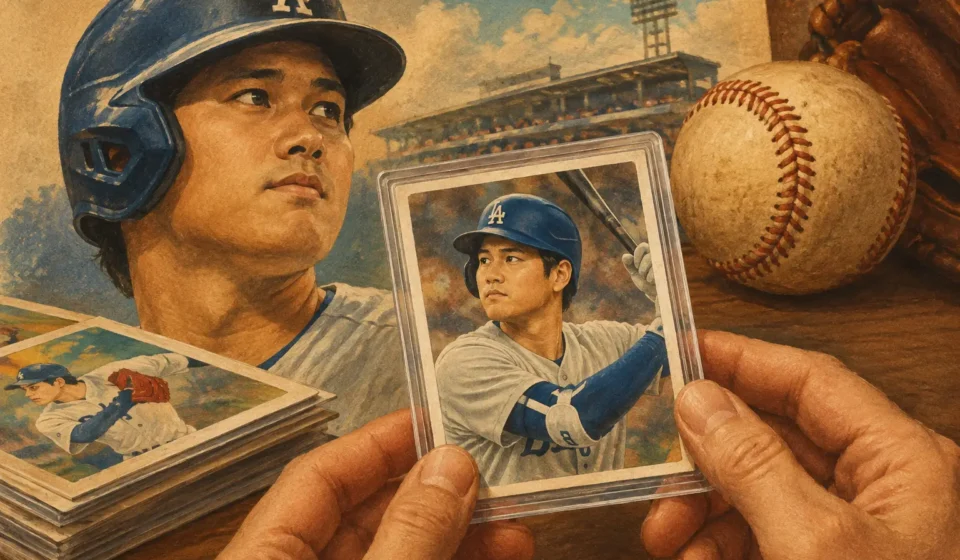

 A Shohei Ohtani rookie card is not one single card. It is a group of 2018 releases spanning flagship Topps, premium chrome products, Japanese issues, inserts, parallels, and short prints. That range gives collectors real choice, but it also makes details such as card number, grading company, image variation, and condition essential before committing to a listing.
Ohtani arrived in Major League Baseball with uncommon collector momentum, then built a career that made the early attention look justified. His two-way status, MVP-level production, global fan base, and continued headline value keep his rookie cards near the center of modern baseball card searches. The right card depends on whether you want a recognizable base rookie, a premium long-term piece, or a lower-entry card for a personal collection.
What Counts as a Shohei Ohtani Rookie Card?
For most US collectors, the core Ohtani rookie card market begins with his 2018 MLB-licensed releases. Topps issued Ohtani cards across its flagship, Chrome, Heritage, Opening Day, Stadium Club, Allen & Ginter, Finest, Bowman, and high-end product lines. Panini also released Ohtani cards in 2018, although those cards do not carry MLB team logos.
The most commonly recognized rookie designation is the RC shield found on many 2018 Topps cards. That logo is a fast visual check, but it should not replace verifying the year, product, and card number. Some desirable 2018 Ohtani cards are inserts or short prints and may not fit the same base-card format. Japanese cards and pre-MLB issues can also be collectible, though they are usually categorized separately from his mainstream MLB rookie cards.
A listing title alone is not enough. Sellers may use terms such as rookie, RC, prospect, debut, or first card broadly. Check the card front and back, confirm the release year, and compare the printed card number to the set identification before treating a card as a true 2018 rookie issue.
The Ohtani Rookie Cards Collectors Know First
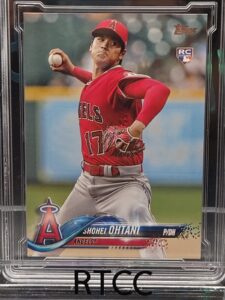
The 2018 Topps Series 2 #700 is the flagship starting point. It is a straightforward base rookie featuring Ohtani in an Angels uniform, and it is familiar to collectors at every level. Because it was widely distributed, it is generally easier to find than short prints or premium releases. That availability makes it a practical first Ohtani card, especially in clean raw condition or a respected mid-to-high grade.
2018 Topps Chrome #150 is another market-defining option. Chrome remains a preferred format for modern collectors because of its finish, parallel structure, and strong grading appeal. A base Topps Chrome Ohtani rookie often costs more than its paper flagship counterpart in comparable condition, while refractors and color parallels can move into a very different price tier.
2018 Topps Heritage #600 has a vintage-inspired design and a large collector following. It is a strong choice for buyers who prefer classic presentation over chrome technology. Condition deserves extra attention here, since dark borders, corners, centering, and surface flaws can affect eye appeal quickly.
2018 Topps Finest #100 offers a more premium chromium look than standard Topps Chrome. Finest cards have long been part of the modern baseball hobby, and Ohtani’s rookie-year issue is a natural fit for collectors building a polished display or targeting refractor parallels.
Other recognizable options include 2018 Bowman #49, 2018 Topps Stadium Club #60, 2018 Topps Allen & Ginter #48, and 2018 Topps Opening Day #200. These are not interchangeable cards. Bowman carries its own prospect-driven collector base, Stadium Club is known for photography, Allen & Ginter has a distinctive design, and Opening Day is typically a more accessible entry point. Choose the product that fits what you actually like to collect, not only the lowest asking price.
Short Prints, Variations, and High-End Releases
Ohtani’s 2018 short prints, image variations, autographs, relics, and serial-numbered parallels are where careful identification matters most. A photo variation can look similar to a base card at a glance but carry a different code or designation. Color parallels should be checked for the stated print run, such as /250, /99, /25, or /5, rather than assumed rare based on card color alone.
High-end products can offer limited runs and premium designs, but they bring trade-offs. A low-numbered card may be difficult to compare because fewer copies appear on the market. Autographs add another authentication consideration. For expensive unsigned or signed cards, clear images of the front, back, slab label, and serial number are part of a sound buying process.
Raw or Graded: Match the Card to Your Goal
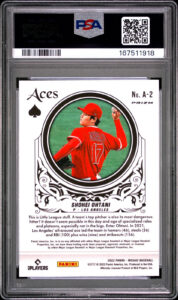
An Ungraded / Raw Shohei Ohtani rookie card can be the right purchase when the card has strong eye appeal, the price reflects its condition, and you are comfortable evaluating flaws. Raw cards offer flexibility and can be more affordable, but condition descriptions vary. Review corners, edges, centering, surface, print lines, and any visible scratching. Chrome cards deserve especially close surface inspection under reflected light.
Graded cards reduce some of the uncertainty by placing the card in a labeled holder from PSA, SGC, BGS, or another grading company. A PSA 10 is often the most liquid modern grade because it is broadly recognized and easy for collectors to compare. That does not mean every PSA 10 is automatically the best buy. The premium over a PSA 9, SGC 9.5, BGS 9.5, or clean raw example can be substantial, and your budget may be better used on a scarcer parallel or card format you prefer.
Read the entire slab label. Confirm the player, year, manufacturer, set, card number, and grade. A label can distinguish a base card from a refractor, a standard issue from an image variation, or an autograph from a non-autographed version. For BGS cards, subgrades may also influence buyer preference. For SGC cards, the black-tuxedo presentation is popular with collectors who value display appeal.
How to Compare Active Listings
Start with a precise card identity: 2018, manufacturer, set, card number, and version. “2018 Shohei Ohtani rookie” returns a broad group of cards. “2018 Topps Chrome #150 Refractor PSA 10” describes a specific collectible and makes comparison far easier.
Next, compare like with like. A raw base card should not be measured against a PSA 10 refractor. A card listed as mint may still have visible centering or surface concerns. If several listings appear similar, prioritize the one with clear front-and-back photos, a specific condition or grading status, and an asking price that fits the exact variation.
When reviewing an active marketplace record, the purchase-relevant details should be easy to locate:
- Player name and rookie-year release
- Manufacturer, product line, and card number
- Base card, refractor, parallel, short print, or autograph designation
- Grading company and numeric grade, or Ungraded / Raw condition
- Visible condition details and current asking price
Those fields prevent the most common comparison mistake: paying a premium for a card that is not the same version as the card you intended to buy. RookieCards.net is built around this type of quick, card-by-card review, helping collectors sort recognizable Ohtani issues by the details that drive the decision.
Set a Budget Before Chasing the Grade
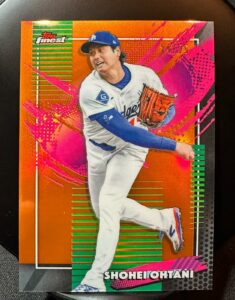
A buyer with a modest budget may get more enjoyment from a clean 2018 Topps Series 2 #700, Heritage #600, or Opening Day #200 than from stretching for a lower-grade chrome card just because it is chromium. On the other hand, collectors focused on the established modern market may prefer putting fewer dollars into base cards and saving for Topps Chrome, Finest, a refractor, or a limited parallel.
Gift shoppers should usually favor clarity and presentation. A recognizable 2018 Topps or Topps Chrome Ohtani card in a clean slab is easier to explain and display than an obscure parallel with a complicated checklist. Experienced collectors may reasonably make the opposite choice if rarity, serial numbering, or a specific set run is the goal.
Do not assume a high asking price proves scarcity or condition. Marketplace prices are requests, not guarantees of value. Compare the exact card across current listings, account for the grade and visible quality, and leave room in the budget for sales tax, shipping, and protective storage.
A Practical Ohtani Buying Checklist
Before purchasing, verify that the card matches the listing title and that the card number is correct for the set. Check whether it is base, refractor, parallel, variation, autograph, or relic. If it is graded, match the label details to the card image. If it is raw, inspect every available photo rather than relying on a single front scan.
The strongest purchase is usually the one you can identify without hesitation. Whether that is a flagship 2018 Topps #700, a Topps Chrome #150, or a numbered premium parallel, buy the Ohtani rookie card whose set, condition, and price still make sense after the excitement of the search has passed.